



- Home
- LOCAL PRODUCE
- DESIGNATIONS AND BRANDS
- VI DE LA TERRA ILLES BALEARS
Vi de la Terra Illes Balears
Protected geographical indication
 Protected geographical indication
 Protected geographical indication
 Protected geographical indication
 Protected geographical indication
 Protected geographical indication
 Protected geographical indication
Centuries of Mediterranean tradition on the Balearic Archipelago
‘Vi de la Terra Illes Balears’ wines reflect a rich winemaking heritage that dates back to Roman times. Thanks to the distinctive Mediterranean climate and chalky soils, these wines are known for their exceptional character and quality.
The winegrowing history of the Balearic Islands dates back to Roman times, when the first vineyards were planted in the 1st century BC. Pliny the Elder compared Balearic wines with the best in Italy, standing out for their quality. Vine cultivation continued throughout the Arab domination despite Koranic prohibitions, thanks to the advanced irrigation systems introduced by the Arabs.
In 1229, James I reconquered Mallorca and revived winegrowing on the island. The 18th century saw a boom in wine production, reaching 335,331 hectolitres in 1802. However, the 19th century brought challenges such as aphids and phylloxera, which devastated local vineyards. Despite these obstacles, French demand during the Great French Wine Blight drove the rapid expansion of Balearic vineyards between 1865 and 1890.
The arrival of phylloxera to the Balearic Islands in 1891 marked the end of this golden era, drastically reducing production and forcing the region to import wine to meet local demand. It wasn’t until the 1990s that Balearic winegrowing took off once again, with a focus on quality over quantity. This revival has been driven by dedicated winegrowers who have improved cultivation techniques and modernised wineries.
The production area of ‘Vi de la Terra Illes Balears’ covers the entire Balearic archipelago. The chalky, sandy soils, together with the moderate Mediterranean climate, provide the ideal environment for vine cultivation. The permitted grape varieties include reds such as Cabernet Sauvignon, Merlot, Syrah, Monastrell, Tempranillo, Fogoneu, Callet, Manto Negro and Pinot Noir, and whites such as Chardonnay, Muscat, Prensal Blanc, Parellada, Macabeo, Malvsavia, Riesling, Viognier and Sauvignon Blanc.
Balearic red wines, especially Cabernet Sauvignon, Merlot and Callet, are distinguished by their intense colour, robust body and rich tannins, making them ideal for ageing. Chardonnay white varietal wines are known for their tropical aromas and freshness on the palate, while Muscatel whites stand out for their floral notes and balance.
The minimum alcohol content for wines with this indication is 10.5% for whites, 11% for rosés and 11.5% for reds. Furthermore, all bottles must bear an official control number assigned by the Institute for Food Quality (IQUA) of the Balearic Islands, thus guaranteeing their authenticity and quality.
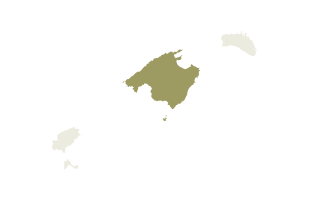
Mallorca


