



- Home
- LOCAL PRODUCE
- DESIGNATIONS AND BRANDS
- VINO DE LA TIERRA SIERRA DE TRAMUNTANA-COSTA NORD PDO
Vino de la Tierra Sierra de Tramuntana-Costa Nord PDO
Protected geographical indication
 Protected geographical indication
 Protected geographical indication
 Protected geographical indication
 Protected geographical indication
 Protected geographical indication
 Protected geographical indication
Exquisite wines in a World Heritage setting
Vino de la Tierra Serra de Tramuntana-Costa Nord is a wine trove that captures centuries of history and a prime geoclimatic environment. From the Roman settlements to the modern revival of the industry in the 1990s, this designation of origin is synonymous with quality and tradition. Explore the wines of this region and discover how each glass tells a story of the land, hard work and passion.
The winegrowing history of Serra de Tramuntana-Costa Nord likely began with the Roman settlement in Mallorca, specifically in the city of Pollença. For centuries, vine cultivation has been a core industry, especially in the 14th century when King Martí I exempted Alcúdia from paying taxes on wine, which led to a monoculture of vines and a flourishing maritime trade.
One of the most typical varieties of the region is Malvasia, thought to have been introduced from Italy in the 15th or 16th century. This wine has been acclaimed at royal tables and by Mallorcan high society, and praised by writers and poets. In the 19th century, winegrowing reached its peak with more than 400 hectares of vineyards in Pollença alone. However, the arrival of phylloxera in 1891 devastated the vineyards and drastically reduced production.
Despite these challenges, in the 1990s, local winegrowers and winemakers revived winegrowing in the region. Thanks to their efforts and the exceptional geoclimatic conditions, the wines of Serra de Tramuntana-Costa Nord are today recognised for their quality and uniqueness.
The production area of ‘Vino de la Tierra Serra de Tramuntana-Costa Nord’ includes 18 municipalities from the cape of Formentor to Andratx. Serra de Tramuntana, declared a World Heritage Site by UNESCO, provides an ideal microclimate for vine cultivation. The mountains stand over 1,000 metres tall, and the valleys between them mean that grapes can be grown under optimum conditions. The limestone and loam soil enhance the quality of the wines.
The permitted grape varieties include reds such as Cabernet Sauvignon, Merlot, Syrah/Shiraz, Monastrell, Tempranillo, Callet and Manto Negro, and whites such as Malvasia, Muscat, Moll/Prensal Blanc, Parellada, Macabeo, Chardonnay and Sauvignon Blanc. Traditional cultivation practices, together with a planting density of no more than 5,500 vines per hectare, ensure high quality grapes. The grapes are carefully harvested, using only healthy grapes that are suitably ripe.
Malvasia white wines are particularly appreciated for their aromatic potential, with notes of fruit such as pear and melon. Chardonnay wines are balanced, with tropical fruit aromas and a lingering finish. The red wines, made from reputable grape varieties such as Cabernet Sauvignon and Merlot, are intense in colour, rich in tannins and suitable for ageing. They give aromas of ripe plum and cherry, with hints of fig and sultana.
The minimum alcohol content is 12% for white wines and 12.5% for red and rosé wines. All bottles with the geographical indication ‘Vino de la Tierra Serra de Tramuntana-Costa Nord’ are labelled with an official control number assigned by the Institute for Food Quality (IQUA) of the Balearic Islands to guarantee their authenticity and quality.
Visiting the Serra de Tramuntana wine route is a unique experience. From the family-run wineries in Puigpunyent and Estellencs to the high-altitude vineyards in Escorca, each visit reveals the enthusiasm and dedication of the local producers. To enjoy these wines is to taste the lifeblood of a region that has perfected its art of winemaking over the centuries, offering a truly special experience in the heart of the Mediterranean.
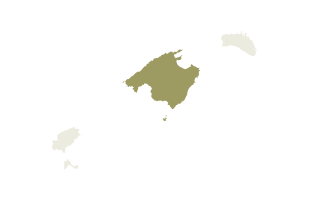
Mallorca


