



- Home
- LOCAL PRODUCE
- DESIGNATIONS AND BRANDS
- PROTECTED GEOGRAPHICAL INDICATION ‘ENSAÏMADA DE MALLORCA’
Protected Geographical Indication ‘Ensaïmada de Mallorca’
Protected geographical indication
 Protected geographical indication
 Protected geographical indication
 Protected geographical indication
 Protected geographical indication
 Protected geographical indication
 Protected geographical indication
The sweet symbol of Mallorca that captivates taste buds around the world
The Ensaïmada de Mallorca is more than just a sweet treat. It’s a piece of Mallorca’s culture and cuisine that encapsulates the island’s wealth of history and traditions. Its handcrafted process and unmistakable flavour make it a symbol of the island, loved by locals and visitors alike.
Since the 17th century, this sweetened, fermented, baked dough has been a delicacy at Mallorcan festivities and celebrations. In the 18th century, the ensaïmada became popular among the middle and upper classes, often served with hot chocolate at breakfast and teatime.
The Ensaïmada de Mallorca gained fame beyond the island throughout the 19th century, featuring in recipe publications and treatises on baking. Archduke Ludwig Salvator of Habsburg, in his work Die Balearen, talked about the ensaïmada as a typical Mallorcan pastry enjoyed by the middle and upper classes. Today, the Ensaïmada de Mallorca is still eaten in its traditional form and is a handmade product known worldwide.
The process of making ensaïmada is highly detailed and requires top-quality ingredients. Strong flour (45-55%), water (18-20%), sugar (16-20%), eggs (6-10%) and sourdough (4-6%) are used. Lard, known as saïm, is essential and gives the product its name. The lard provides ensaïmada with its flaky texture and distinct flavour. The flour used must be strong and stretchy enough to withstand the long fermentation process, which is at least 12 hours.
There are several stages involved in making ensaïmada: kneading, rolling, shaping, fermenting and baking. First, all the ingredients are kneaded into a uniform dough. The dough is then rolled out, covered with lard and stretched into a thin film. This film is rolled up on itself, creating a spiral of at least two turns clockwise. The fermented dough is baked to obtain an ensaïmada with its characteristic golden, crunchy coating.
There are two main types of Ensaïmada de Mallorca: the classic one, without filling, and the one filled with cabell d'àngel (literally ‘angel hair’). Cabell d'àngel is made of pumpkin pulp and sugar, and in ensaïmada it must make up at least 40% of the weight of the dough. Both kinds can be sprinkled with icing sugar for a finishing touch.
Ensaïmada is shaped like a spiral with wave-like twists, and the outside has a bright golden colour and crunchy texture. The base is smooth and sticky due to the build-up of lard, while the interior is soft and flaky, with visible layers of oily dough. In the ensaïmada cabell d'àngel, you can see the strands of the sweet filling inside.
The Ensaïmada de Mallorca is recognised by its Protected Geographical Indication (PGI or IGP), which assures the quality and authenticity of the product. This label is only awarded to ensaïmadas that meet strict production standards, from the selection of ingredients to the production process. Small ensaïmadas are traditionally eaten at breakfast and teatime, while the larger ones are sold in octagon or circle-shaped cardboard boxes, with a quality seal from the Regulatory Council.
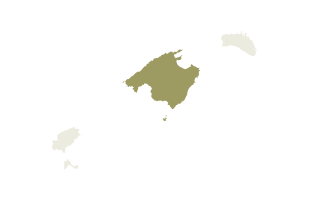
Mallorca


