



- Home
- EXPERIENCES
- LANDSCAPES AND ROUTES
- WHERE WINTER IS ADORNED BY ALMOND TREES
Where Winter is Adorned by Almond Trees
 LANDSCAPE
 LANDSCAPE
 LANDSCAPE
 LANDSCAPE
 LANDSCAPE
 LANDSCAPE
From Raiguer to the Tramuntana mountains, a symphony of almond trees, towns and tradition
Every winter, before spring arrives, Mallorca is covered in white and pink flowers as the almond trees blossom. This phenomenon marks the beginning of a farming cycle that goes back centuries, closely tied to the island's history and cuisine. The flowers are used in products such as gató (almond cake), llet d'ametlla (almond milk) and liqueur, symbols of a culture that has stood the test of time.
Every winter, before spring fully awakens, the fields of Mallorca turn white and pink from the almond blossom. This calm, quiet transformation infuses the farmland with soft aromas and creates a blanket of velvety textures. This phenomenon is not just a feast for the eyes, but the beginning of a farming cycle that has marked the island's farming culture for centuries.
Originally from Asia and cultivated in the Mediterranean since Roman times, the almond tree found the perfect climate and soil to thrive on the island. Its early flowering, between January and February, marks the end of the winter slumber. But there's also a risk: a single frost can ruin an entire harvest. For this reason, many farms plant several varieties with staggered flowering to protect the farmers' work.
Beyond providing a stunning landscape, the Mallorcan almond is also an essential ingredient in local cuisine. Its delicate flavour and buttery texture give shape to desserts such as gató almond cake, served with almond ice cream, and panellets, which are made for All Saints' Day. Llet d'ametlla, a traditional drink, and almond liqueur preserve the sweet and bitter nuances of the most farmed nut in the Balearic Islands.
Almond tree farming boomed in the 19th century, when it replaced vineyards after the arrival of the phylloxera plague. It changed the landscape and saved the farming economy. Today, the diversity of local varieties, such as Ponç, Glorieta or Fita Mollar, is part of the island's agricultural heritage. And although Xylella disease has threatened many trees, small producers and cooperatives continue to keep this legacy alive through great effort and pride.
From the fields of Lloseta to the terraces of the Tramuntana mountains, all the way to Llucmajor, Santa Maria and Felanitx, the almond and its flower continue to mark the rhythm of a Mallorca that breathes agriculture, cuisine and landscape in a single gesture. A gesture that always begins with a white bud in the middle of winter.
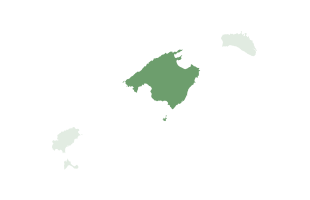
Mallorca


