



- Home
- EXPERIENCES
- LANDSCAPES AND ROUTES
- MARE NOSTRUM: MEDITERRANEAN FLAVOUR
Mare Nostrum: Mediterranean Flavour
 LANDSCAPE
 LANDSCAPE
 LANDSCAPE
 LANDSCAPE
 LANDSCAPE
 LANDSCAPE
Natural landscapes and culinary delights come together at beautiful ports on the island of Mallorca.
Mallorca's ports are living fragments of the island's history. They bring together the seafaring tradition, functional architecture, long-lost trades and the most deep-rooted food. Places where fishing, artisanal shipbuilding and trade have shaped not only the coastal landscape, but also the island's popular recipes and cultural identity.
Mallorca has always lived looking out to sea. Along its coastline, the ports are not only hubs for maritime connection or shelter for boats: they're also places where the coastal landscape intertwines with the island's history and tangible culture. From modest fishing activity at coves like Banyalbufar to the historical bustle of Palma, the docks have witnessed centuries of trade, defence, subsistence and transformation.
It was here that trades were born and perfected, such as that of carpenters, who shaped the llaüts: traditional lateen-sailed boats that can still be seen soaring through some waters today. Their silhouette, inseparable from the harbour skyline, shares the same sensational landscape with nets stretched out in the sun, the smell of tar and salt, and the sound of masts tinkling in the breeze. In this marine territory, the port has always been a natural storehouse for products, and a point of departure and arrival for ingredients and flavours.
Mallorcan seafood is rooted in these coastal environments: it's here that dishes so closely linked to the port originate, including fish stews like bullit de peix and escaldums d'anec mariner, made with what the net offered and what the land was able to preserve. Dried fish, mariner's bread, ‘Palo’ liqueur and brine are all culinary remnants of a kind of port life that may seem distant today, but which can still be tasted in certain local kitchens. Some ports, such as Portocolom, sent wine to France as early as the 19th century, and this also shaped tastes, routes and memories.
Each port has its own character. Sóller, isolated by the mountains, had its own rhythm of supply and export, while places like Es Port (Estellencs) or s'Estaca still maintain their humble coastal retreats. Even at the more modern-looking ports, such as Andratx or Port Adriano, there are still traces of fundamental infrastructure from when the sea dictated the weather, and the fresh fish caught defined the menu of the day. In short, Mallorca's ports were built not only for transit, but also for exchanging knowledge, recipes and edible landscapes.
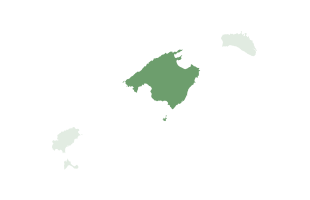
Mallorca


