



- Home
- EXPERIENCES
- LANDSCAPES AND ROUTES
- THE LANGUAGE OF THE LAND: AUTHENTIC FLAVOURS FROM SA POBLA'S LANDSCAPE
The Language of the Land: Authentic Flavours from Sa Pobla's Landscape
 LANDSCAPE
 LANDSCAPE
 LANDSCAPE
 LANDSCAPE
 LANDSCAPE
 LANDSCAPE
A journey across the land of potatoes, rice and traditional local eel.
Sa Pobla is a unique agricultural landscape in Mallorca, where the marshlands give life to three signature products: potatoes, bombeta rice and eel. This trio not only defines the town's culinary identity, but also its history and ties to the land. The Sa Pobla potato, bombeta rice and eel, traditionally caught in s'Albufera, are used in recipes such as espinagada, a culinary symbol of a thriving rural culture that successfully keeps age-old knowledge alive in every dish.
In the heart of the Mallorcan marshlands, the agricultural landscape of Sa Pobla reveals an identity built on damp soil, careful work and a unique culinary trio: potatoes, bombeta rice and eel. These three products, with close ties to the natural and cultural environment of the town, are more than just ingredients: they tell a story of adaptation, subsistence and countryside pride. The waters that irrigate the marshlands, the fertile soils and the skills passed down from generation to generation have made this place one of the greatest agri-food destinations with the most personality on the island.
The Sa Pobla potato, the unchallenged dominant crop in the area since the 16th century, achieved international fame in the 1920s with the first exports to the United Kingdom. Today, the Maris Peer variety, small and precocious, continues to be an ambassador of the island in Europe, while at home it's still appreciated in traditional food such as the fried meat dish frit mallorquí, the vegetable stew tombet, and seasonal savoury coca bread. Its firm texture and neutral flavour make it an essential ingredient in local cuisine, especially when used together with local products such as rice or eel.
Bombeta rice, also known as arròs pobler, is a variety that only reaches its peak in the marshlands of Sa Pobla and Muro. Its resistance to overcooking, firm texture and ability to soak up flavours make it the ideal grain for dishes such as arròs brut ('dirty rice’) and arròs de la marjal (literally ‘rice from the marshland’). Introduced at the beginning of the 20th century by Compañía Agrícola Industrial Balear, the bombeta crop gradually became more prominent until it became a local icon. Its quality is such that attempts to replicate it on the mainland have failed to capture its characteristic taste and texture.
And in the midst of these fields of water and mud, we find the eel, a traditional creature that completes this countryside culinary trio. It's found in streams and canals, giving rise to unique dishes such as espinagada d'anguila, a kind of coca bread pie that contains the fish and spinach or cabbage, flavoured with herbs, spices and olive oil. From medieval times, its origins can be traced back to the need to preserve food using bread dough, and it's still made today as a domestic ritual that's survived generations, especially during the Sant Antoni festival.
The agricultural landscape of Sa Pobla, woven between marshlands, stovetops and tradition, not only produces food: it cultivates identity. In every sack of potatoes, every sack of bombeta rice and every baked espinagada, there's a story shared between farmers, cooks and diners. Here, the land both nourishes and tells a story, and local cuisine cannot be explained without the landscape that sustains it.
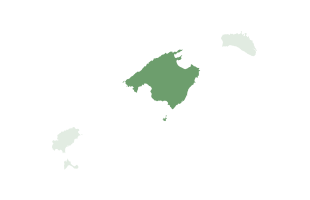
Sa Pobla (Mallorca)


