



- Home
- EXPERIENCES
- LANDSCAPES AND ROUTES
- TAP DE CORTÍ: THE RED HEARTBEAT OF MALLORCA
Tap de Cortí: The Red Heartbeat of Mallorca
 LANDSCAPE
 LANDSCAPE
 LANDSCAPE
 LANDSCAPE
 LANDSCAPE
 LANDSCAPE
Between fields and stovetops, Tap de Cortí peppers paint a landscape of tradition, aroma and Mediterranean culture.
Every summer, inland Mallorca is tinged red with Tap de Cortí, a local pepper that's essential in traditional food. Dried in the sun and stone-ground, it gives rise to pebre bord paprika, a key ingredient in food such as sobrassada sausage. The farming of this pepper was almost lost in the 20th century, but has been recovered as a symbol of Mallorca's agricultural landscape and flavour.
Every summer, the fields in Pla de Mallorca and other inland areas are dyed bright red, a colour that heralds the ripening of Tap de Cortí, a native pepper that has marked the island's culinary identity for centuries. This small, pointed variety of pepper is the soul of the traditional ‘pebre bord’, a paprika that not only gives aroma and colour to Mallorcan dishes, but also preserves—literally—part of its history. Tap de Cortí, originally from America and documented in Mallorca since the end of the 16th century, experienced its heyday between the 18th and 19th centuries, when it decorated the outside walls of countryside houses during the sun-drying process.
The image of hundreds of garlands of peppers hanging like red curtains on whitewashed walls was a common sight in towns such as Pòrtol, Santa Maria del Camí, Llucmajor and Campos. This drying technique was not only decorative, but also functional: it protected the fruit's natural antioxidants, essential for preserving foods such as sobrassada, which was white and perishable until paprika surfaced. Tap de Cortí has therefore become a crucial element in turning sausages into long-lasting, tasty products. This small, triangular-shaped, sweet-tasting fruit is also central to island dishes such as the fried meat dish frit mallorquí, the vegetable stew tombet and Mallorcan soup.
The decline of this variety began in the 1970s, sidelined by competition from cheaper foreign products. However, a wave of recovery began in 2008 thanks to the joint efforts of farmers, organisations such as Slow Food Illes Balears and local cooperatives, which gave out thousands of seeds to producers committed to agricultural biodiversity and sustainability. Today, initiatives such as Agromart's have brought this fruit back to the Mallorcan landscape and cuisine, taking care of its cultivation under integrated farming and organic production practices.
The production process of Tap de Cortí involves a lot of work: they are harvested by hand, one by one, respecting their peak ripening. They are then dried in the sun, roasted over oak wood, threshed and finally stone-ground. This ritual not only guarantees a high quality paprika, but also prolongs the ancestral wisdom of generations of farmers. The result is a condiment rooted in island culture, with high colouring power, a sweet aroma and antioxidant qualities.
Tap de Cortí has once again dyed the fields red, reminding us that history also plays a role in building Mallorca's agricultural landscape. Centuries of history, cuisine and identity thrive in its furrows, where the land, the climate and human labour merge to form a harmony that, fortunately, still lasts.
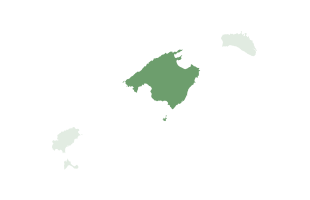
Alaró (Mallorca)


